 Published
Updated
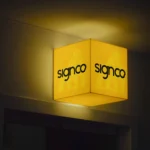
If people walk past your shop, first identify whether they fail to notice it, misunderstand what it offers or cannot recognise the entrance. Those are different problems. A useful signage change addresses the observed gap rather than simply making every element larger or brighter. SignCo’s custom signage service and window graphics are relevant options to discuss once the brief is clear.
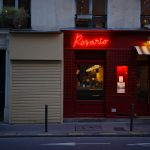
Walk towards the shop from the routes customers use. Photograph the view at several points in daylight and, if relevant, after dark. Record obstructions, reflections, competing signs and the first place the entrance becomes recognisable.
Ask someone unfamiliar with the business what they think the shop sells and where they would enter. Do not prompt them with the answer. Their response can distinguish a visibility problem from a message problem, even though a small test is not a representative customer survey.
| Observed problem | Change to investigate | Check before purchase |
|---|---|---|
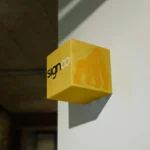
| Shop is hard to spot | Clearer fascia or an appropriate additional viewing angle | Building context, permissions and actual approaches |
| Business is noticed but misunderstood | A concise service or product descriptor | Whether an unfamiliar visitor understands it |
| Entrance is unclear | A cleaner threshold and better positioned information | Door operation, glazing and visitor route |
| Window is visually crowded | Remove competing offers and prioritise one campaign | View from outside with reflections present |
| Evening identity disappears | An appropriate lighting proposal | Glare, maintenance, permissions and neighbours |
The business name should be recognisable, the offer understandable and the next action clear. An unfamiliar brand name may need a short descriptor. Secondary information should not force the reader to work through a paragraph before learning what you do.
Use the reading test to examine distance and contrast. For the window, the campaign zoning guide helps keep an entrance visible. A permanent fascia and a temporary promotion should have different jobs.
A clean-up and a simpler offer may be enough. A damaged or poorly positioned sign may require a replacement. An evening problem may need lighting assessment. Avoid choosing a new product first and trying to justify it afterwards.
Use the shopfront procurement guide if the work becomes a substantial sign project. Consider evening visibility where trading hours extend into darkness. A temporary poster can support a campaign, but should not be expected to solve every structural visibility problem.
Choose a primary measure before installation: fewer missed-entrance enquiries, better recognition in a reading test or a change in tracked visits. Record comparable conditions before and after. The measurement guide explains useful signals and their limits.
A signage change may coincide with weather, promotions, roadworks or changes in opening hours. Keep those factors in the record. Helpful content can explain how to investigate visibility, but it should not invent a guaranteed increase in footfall or sales.
First observe the problem. Placement, message clutter or entrance confusion may require a different response.
No guaranteed outcome is assumed. Test readability, suitability and the actual visitor problem.
They may clarify an offer, provided they do not hide the entrance or create clutter.
A supplier offering consultation, shop signs and window graphics, such as SignCo, is a relevant enquiry option.
Define a baseline and a useful measure, then compare conditions and record other influences.
Request a shopfront visibility review with approach photographs. Explore SignCo’s custom signage or contact the team.