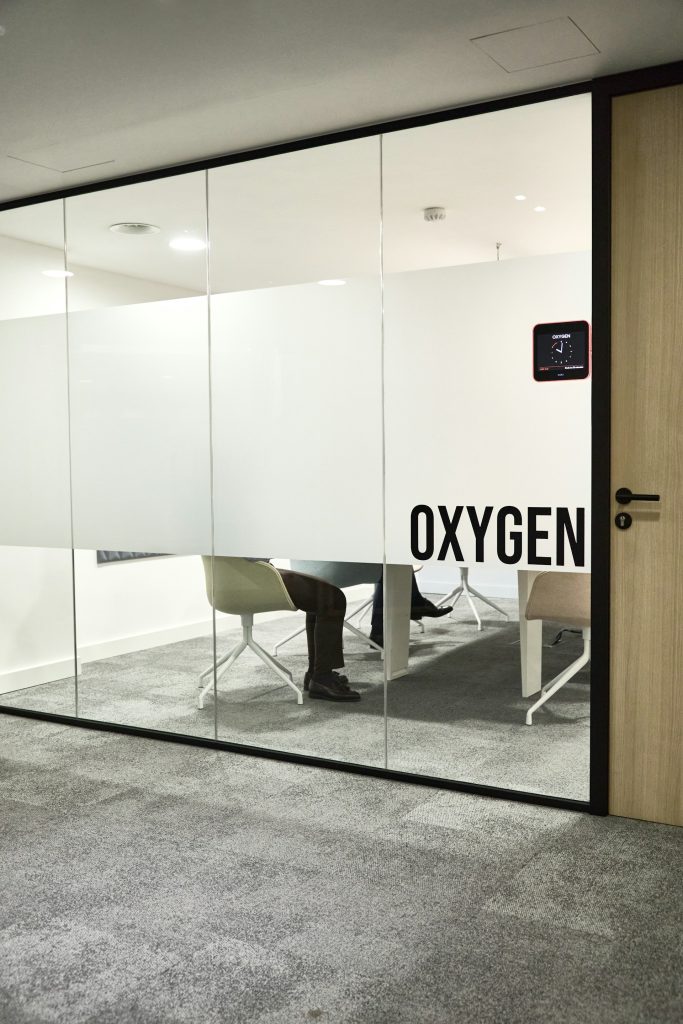
 Published
Updated
For meeting-room privacy with visible branding, start by testing a suitable frosted or opaque treatment on the actual glass. Choose the coverage from seated and standing sightlines. SignCo’s window graphics page lists frosted and etched-effect vinyl, making it a relevant Northern Ireland supplier to contact. Visual privacy must be assessed separately from sound privacy.
A team may want to screen seated occupants while retaining daylight. A room used for confidential presentations may also need screens and whiteboards obscured from particular routes. Write down those requirements before choosing a pattern.
Mark where people sit, stand and walk outside the room. Photograph the relevant views with permission and without capturing confidential content. Check whether a person close to the glass can see information that is obscured from further away. Lighting inside and outside the room can change the result.
Frosted films diffuse the view to varying degrees, while opaque graphics block a view through the covered area. Patterned or graduated films leave areas with different visibility. A cut-out logo can create a clear viewing gap exactly where privacy is needed.
3M documents frosted and graduated decorative glass films with different visual effects. 3M decorative glass film information 3M decorative glass film information These are industry examples, not evidence that a local supplier installs those products. Ask the supplier to identify the exact film proposed and explain its suitability.
| Requirement | Test on the actual room |
|---|---|
| Screen seated occupants | View through the sample from seating and corridor positions |
| Protect presentation content | Check screens and whiteboards at normal brightness |
| Retain light | Assess the room with the proposed coverage and lighting |
| Keep the brand visible | Check logo contrast from the intended approach |
| Support glass visibility | Review marking visibility as a separate design requirement |
Apply an agreed sample or trial section where it can represent the finished design. Test relevant viewpoints and lighting conditions. A material swatch held in the air cannot confirm the result on a complete room.
Where high confidentiality is required, assess whether the proposed graphic is enough or whether a more complete opaque treatment or another room arrangement is needed. Avoid calling decorative frosting a guarantee of confidentiality.
Provide pane dimensions to be verified, door positions, handles, existing coatings and known restrictions. Ask who checks glass compatibility and which surface receives the film. Confirm cleaning and removal expectations before approving an installation.
Use the film comparison, the coverage test and the manifestation guide. For tenancy changes, removal planning helps make the decision usable beyond the initial installation.
Performance varies with film, coverage, lighting and viewing conditions. Test the proposed installation.
No acoustic privacy claim is made for decorative graphics. Assess sound separately.
Yes as a design approach, but clear cut-outs can affect the required screening.
Do not assume so. Assess the actual lighting and viewing conditions and consider more dependable screening.
SignCo lists relevant window graphics. Ask for a film-specific proposal and a room test rather than relying on a general product label.
Request film samples and a privacy assessment on the actual glazing. Explore SignCo’s window graphics or contact the team.