 Published
Updated
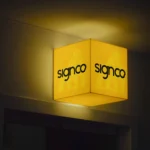
Choose one illuminated face when the audience sees one side; consider two when there is a useful audience on both sides. The actual floor plan matters more than buying the most extensive specification.
Mark walls, aisles, counters and staff positions. If one side will sit against a wall or be hidden by storage, a second graphic may have little value. In an open area, visitors may approach from more than one direction.
Check whether both faces need the same message. One may introduce the brand while another faces an internal conversation area. Keep the two designs consistent without assuming they must be identical.
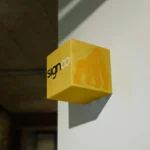
Ask whether the proposed unit is wall-mounted or freestanding and what hardware each configuration requires. A product’s printed face size does not describe its supporting footprint. Confirm feet, brackets, depth and cable exit positions.
A single-sided frame and a double-sided frame may differ in construction, lighting arrangement and graphics. Do not assume that adding a second print converts one into the other. Use the manufacturer’s supported configuration.
Place a mock-up of the footprint on the stand plan and check circulation. Review both faces with furniture and people present. Ask whether the rear graphic is actually visible rather than counting its area as a benefit on paper.
Avoid reusing a wall-mounted unit as freestanding without the required assessment and hardware. A display’s visual similarity does not establish structural interchangeability.
Use the system comparison, the stand layout guide and power planning. Send viewing directions with the lightbox enquiry so the quoted configuration matches the job.
Ask whether the proposed model and print arrangement support that specification.
Only if visitors can actually see both faces in the chosen location.
Confirm supported conversion options for the exact model.
Choose content for the viewers on each side, keeping the principal action readable.
Send a floor plan with viewer approaches and nearby walls. Explore SignCo’s LED fabric lightboxes or contact the team.